
Grinders, Sanders and Polishers
Sale of grinders, sanders and polishers
In industries and workshops, the use of a range of tools for finishing parts or components designed for structural, mechanical, or aesthetic purposes is essential. Grinders, sanders, and polishers are a group of abrasive machining devices that, thanks to their versatility, can be used for countless tasks and on a wide variety of materials, to achieve the desired appearance.
Although these instruments share certain similarities, which is why they are often confused with each other, there are important differences worth highlighting between each of them, mainly related to the techniques used, execution speeds, and usage requirements.
The main advantage of these devices is their portability, ease of use, and the ability to deliver precise and professional results. They also offer the ability to treat a variety of surfaces, including metal, wood, plastic, ceramics, and even concrete, among others. The use of each of these tools, or their features, will always depend on the user's needs, the characteristics of the workpieces, and the desired results.
What is a grinder?
The grinder, also known as a grinding wheel, is perhaps one of the most widely used tools for finishing workpieces. This is because it combines two of the most common functions in material processing: roughing and cutting workpieces, in addition to performing complementary tasks, such as sharpening and grinding. Grinders can generally be grouped into two categories:
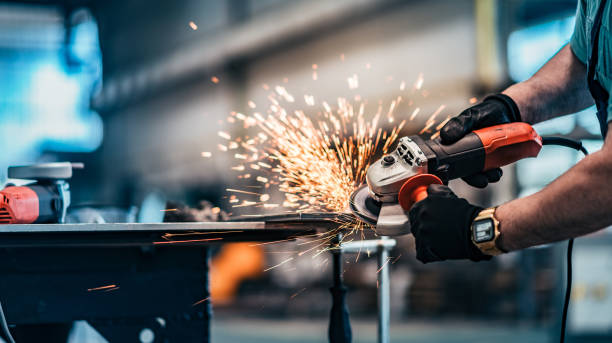
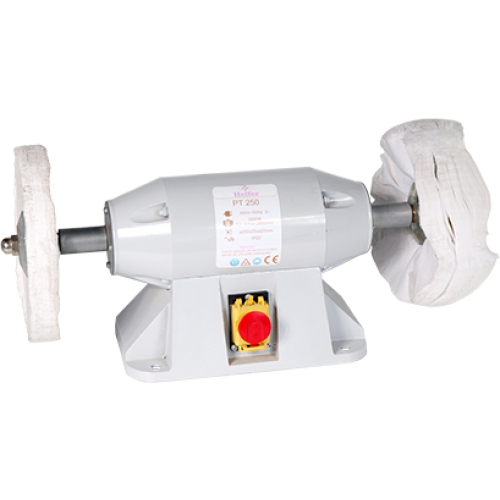
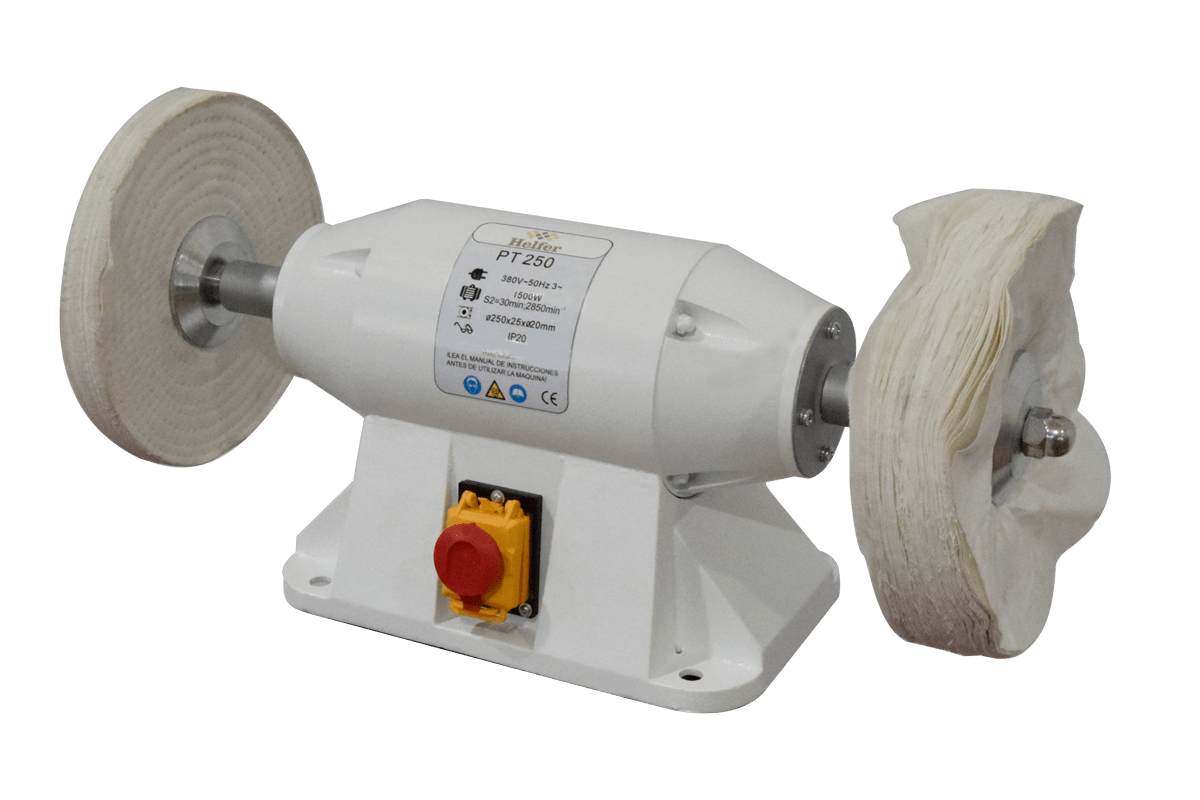
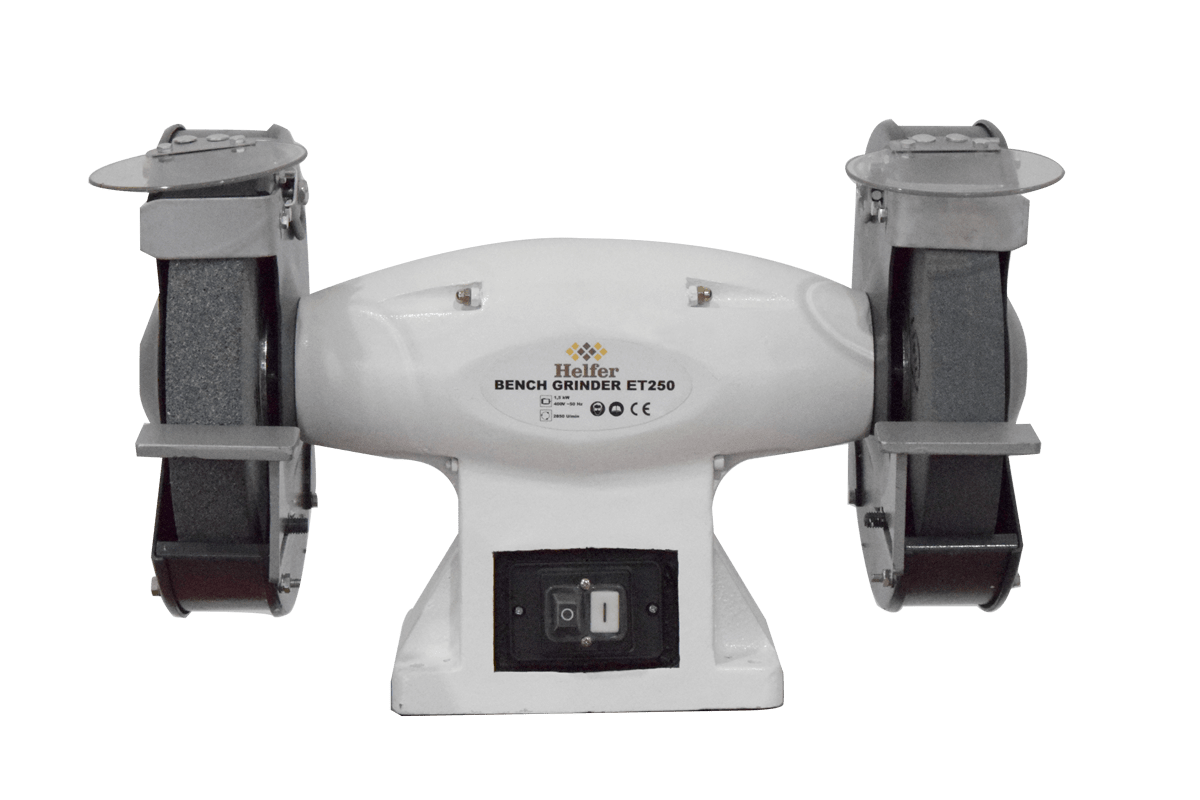
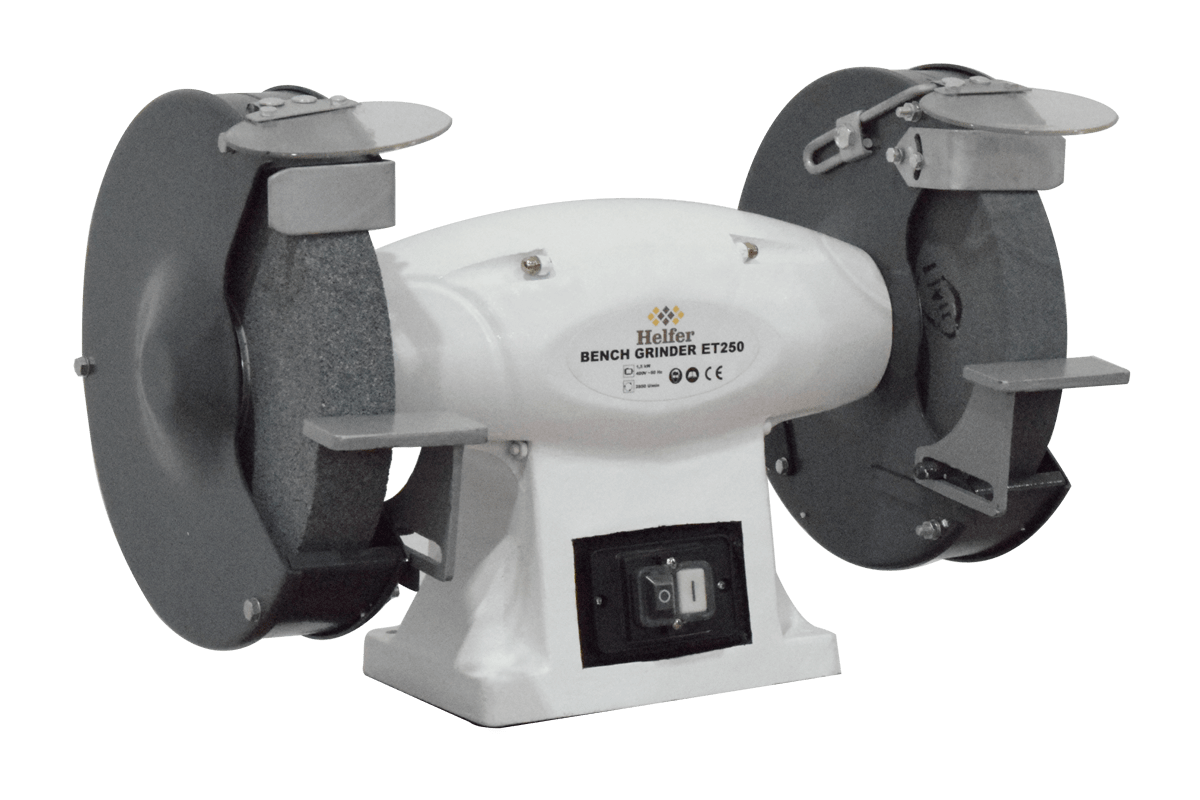
- Straight grinders: These are primarily used in workshops and industries and have more automated features. They can be divided into three types: the bench grinder, which generally incorporates discs at both ends and is placed on a tabletop; the pedestal grinder, which is larger and stands on a cast base for heavy-duty work; and the belt grinder, which adds an abrasive belt or strip for other tasks.
- Angle grinder: Its use is common in home DIY, although it can also be used in industry. It is a portable, easy-to-use tool that, unlike the previous type, incorporates a single grinding wheel for the machining process. It is known as a grinder, and its division is determined by the radial type: there are both large radial grinders and mini grinders, used according to the precision of the work required.
A grinder is composed of four basic parts: the electric motor, the spindle, the grinding wheels, and the guards. Depending on their function or purpose, grinders spin their wheels at speeds ranging from 6,000 to 13,200 revolutions per minute (rpm). They have side handles and the discs used can be 4-1/2", 7", or even 9".
What is a sander?
Sanders are power tools commonly used in carpentry and cabinetmaking, as well as in DIY activities. As their name suggests, their main function is sanding surfaces. Although they are primarily used on wood, they can also be used on metal, plastic, plaster, or drywall, among others, to achieve better finishes.

Although portable sanders are most commonly used, stationary sanders can also be used. Their classification is determined by the sanding mechanisms used, and they can be belt, orbital, or contact.
- Belt sanders: These are used in both small workshops and homes as well as in large factories, given the variety of sizes available. This type of sander operates a motor that rotates two tubes or drums covered with a continuous belt of sandpaper or cloth. They can be available in both portable and stationary versions.
- Orbital sanders: These are commonly used in DIY and small workshops. They operate by executing an elliptical motion with a sanding disc directly over the surface of the material, achieving a much cleaner, streak-free finish. Due to their characteristics, they are only available as portable devices.
- Contact sanders: These machines are developed for use in industrial processes. Their operation is automated and their primary function is the calibration of various types of long-length wood, generating precise results on a large scale. This makes them exclusively stationary units.
The essential element of any type of sander, and one on which the final results of the machining process largely depend, is the sandpaper or cloth. This material can be made from a variety of alloys, as well as varying thicknesses and roughnesses. Speeds and operating modes will be determined by the specific type of tool, with the main advantage being that each tool can have its own waste collection system.
What is a polisher?
Polishers are tools that, due to their shape, tend to be confused with grinders, more specifically angle grinders. Their sole function is polishing, which results in the final finish, an operation performed perpendicularly along the entire surface.

Polishers are primarily used to correct defects or damage to the paint on car bodies to give them a shiny appearance. This characteristic makes the movements performed on the machined material crucial, which is why they define the classification of this type of instrument:
- Circular polishers: also called rotary polishers, are the most commonly used type of device. The disc moves around its own axis, allowing for a more uniform machining process over imperfections, but requiring much more professional handling. Movement speed is measured in revolutions per minute.
- Orbital polishers: also known as dual-action polishers, they perform an elliptical motion on the material, resulting in a less aggressive surface treatment and easy handling for inexperienced operators. Their speed is measured in oscillations per minute.
One of the distinguishing features of this tool is the bonnet or polishing pad , which, depending on the type of polisher or the user's needs, can be made of foam or wool. These machines also typically come with a power and speed adjustment mechanism to minimize damage.