
CNC milling machines
What are CNC milling machines?
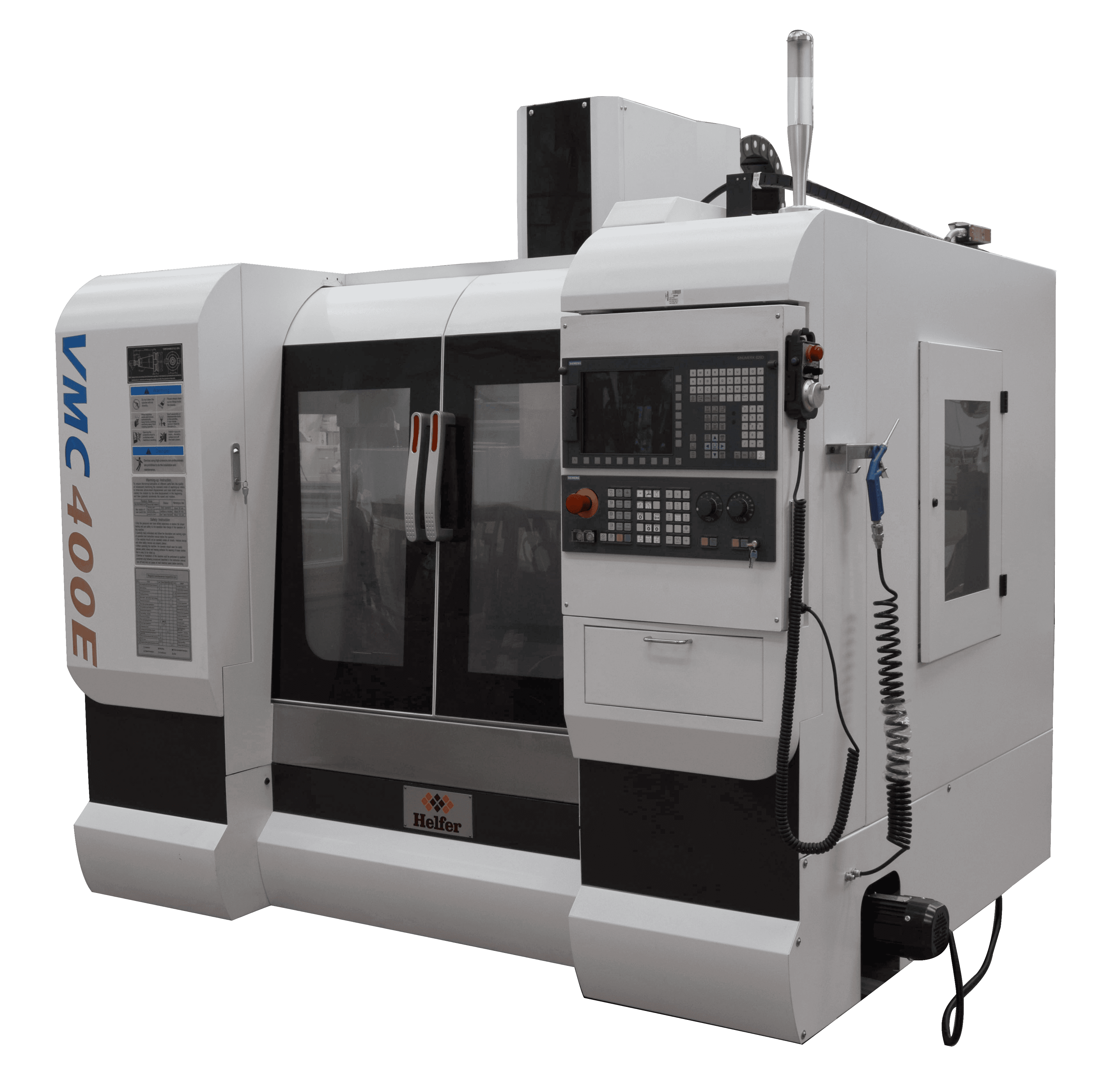
CNC milling machines are a more sophisticated version of conventional milling machines. These CNC machines differ from others because they are controlled by Computer Numerical Control, a characteristic to which the acronym "CNC" is attributed. CNC allows for more precise results in various manufacturing tasks that require professional milling.
This is a modern type of machinery, as it takes advantage of the benefits offered by new technologies to provide more functional and user-friendly machines.

From a technical point of view, CNC milling machines, aside from the particularity of their numerical control, have the same cutting head mechanisms, moving parts, lateral and transverse movement carriages, and table as conventional milling machines.
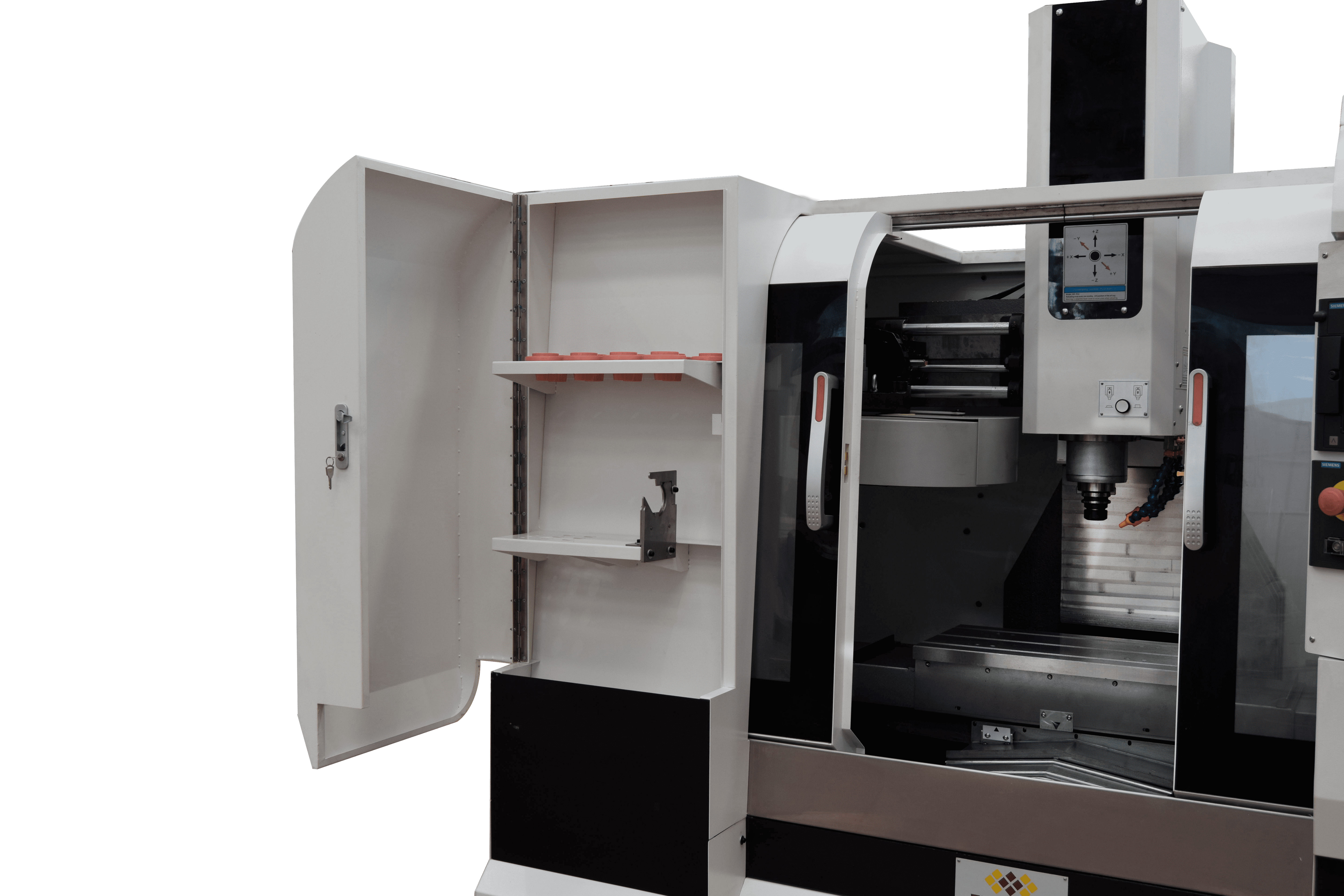
In this regard, it's important to clarify that CNC milling machines, unlike traditional milling machines, do not have levers to actuate the aforementioned parts ; instead, they are all executed through a control panel. This houses the numerical control, and each axis has motors and encoders connected to this control, which send signals to perform precise movements. Therefore, they do not have handwheels like conventional or manual machinery.
Part of these components is the CNC, which could be considered the most important element for the execution of mechanisms by the milling machine.
Components of CNC milling machines
A deeper technical understanding of these machines is necessary to understand how they resemble traditional milling machines and what their parts are . The parts contained in a basic model are as follows:
- Feed motors
- Positioning measurement encoders
- Button panel with Computer Numerical Control (CNC)
- Milling table.
- Cutting head.
- Spindle motor.
- Column with brake.
- Main axes of displacement.
CNC Features
As you might guess, the main feature of these milling machines is the CNC. Its main function is to use numerical data to control the various movements performed by the machine's components : the movements of the lateral, transverse, and vertical slides, the spindle through the main axes, and the movements of the table and/or column if the Z axis moves vertically along the column, or the raising and lowering of the table if the Z axis moves up and down the table.
For movements to be performed correctly, the synchronization of each component must be perfect. It's important to note that the components involved in the CNC process include the complementary, main, and offset axes, the transmission and workholding systems, and the tool changers.

Relationship with CAD and CAM programs
One aspect directly related to CNC machines is the use of CAM software. Thanks to these programs, the manufacturing process is greatly simplified.
Each program has a specific function. In the case of CAD, it is responsible for creating the part design. CAM, for its part, handles the mathematical calculation of the movements of each of the axes involved in machining the part. It is also responsible for controlling the cutting tools and adding speed to the rotations.
In addition to these two programs, control software is required for CNC machines to operate correctly. This software receives commands sent by the CAM so that it can subsequently execute the movement orders for each of the moving parts, as indicated by the CAM program .
Functions of CNC milling machines
CNC milling machines can be used to mill surface contours, profiles or cavities, among other operations.
Specifically, CNC milling machines facilitate the manufacturing of all kinds of metal parts, whether simple or complex. The most common are those used in aerospace, electronics, automotive, and naval technology , among others.
Benefits
The proliferation of CNC milling machines in different sectors is linked to the significant benefits they provide. Among these, the following stand out:
- They can perform the same process thousands of times with exact precision.
- They simplify processes that would be complex to perform manually.
- Because they do not expose workers to cutting tools, they significantly reduce the risk of workplace accidents.
- They reduce the production of metal waste during the execution of manufacturing operations.
- They involve less worker involvement in the milling process, as they automate a large part of the process.
- They allow you to execute complex processes that would be impossible to perform manually.