
Deformation
Machinery for deformation
Forming tools are considered to be machines used to manufacture parts or complete products. These products are, in most cases, made of metal, but some forming tools are designed to work with other types of materials.
In fact, the most notable feature of forming tools is that they are equipped with the ability to work with different metal shapes, with a few exceptions. Likewise, the variety of product shapes they are capable of producing is also very wide.
Manufacturing products using forming tools involves the production of everything from small products like pens to large, complex devices like satellites or aircraft.

How deformation tools work
Forming tools have different operating methods for deforming parts and creating new products. The most common methods are:
- By sculpting blocks of metal, removing excess material through turning, electromagnetic discharges, milling, drilling, and other processes.
- Deformation of the piece through stamping or folding techniques.
- Direct cutting of metal sheets using high-pressure water jets, lasers, and other methods.
Types of deformation machines
There are different types of forming tools. Some consist of simple machines like lathes, but others use modern systems like CNC to equip the machines with the capacity to perform more complex and precise forming tasks. According to their working systems, they are divided into three types:
Roughing or roughing machines
These are machines that require wood removal in order to deform the workpiece.
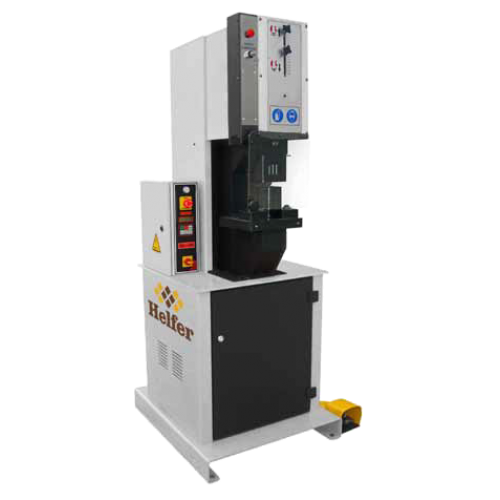
Presses
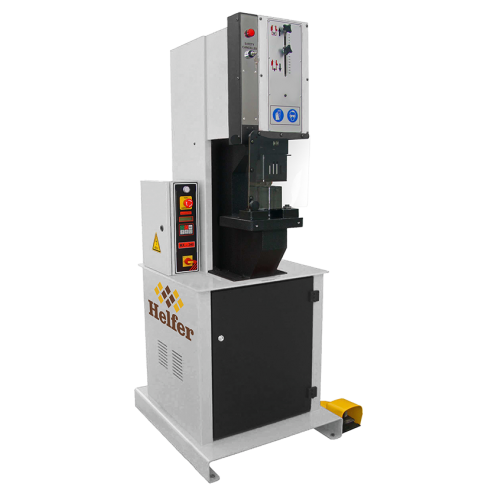
Presses are machines that require stretching, pressing, or cutting mechanisms to shape the piece.
Specials
Special tools are the most modern, as they use laser, ultrasound, plasma, or electroerosion mechanisms, among others, to deform the part.
Characteristics of deformation tools
The most notable feature of deformation tools is their total or partial lack of mobility, since, in most cases, they are stationary tools.
They are also characterized by always removing a portion of the material to be processed to manufacture a part. Furthermore, these machines always use power sources other than human movement. Generally, this type of machinery uses hydraulic wheels to operate. However, in some cases, they can be manipulated using human movement if other power sources are unavailable.
Basic deformation tools
There are some deformation machines that are considered basic because they are the most common in manufacturing processes:
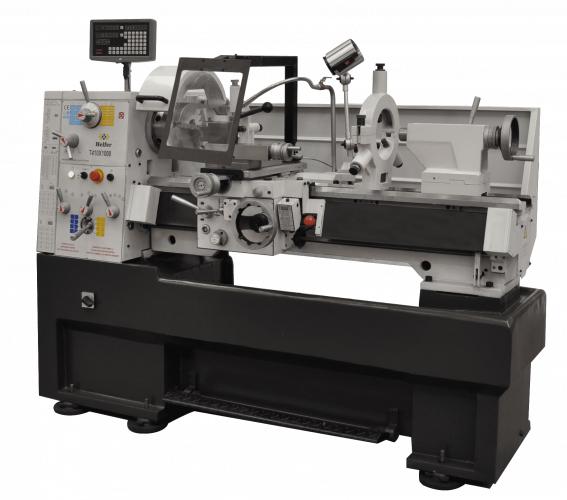
Lathe
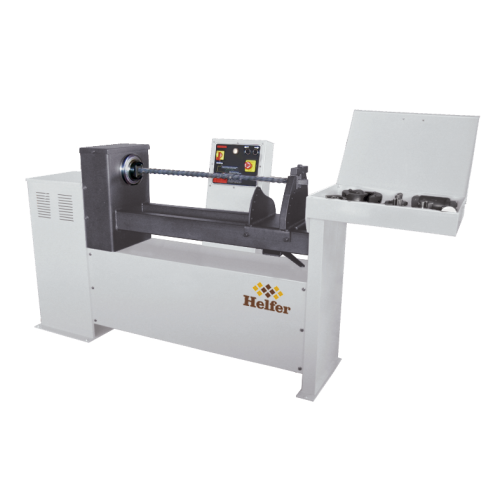
The lathe works with drill bits and cutting tools. To deform the material, it rotates the workpiece using a carriage. As the workpiece rotates, it is abraded by the lathe, resulting in a conical or cylindrical part.
If a drill bit is used, a lathe can make holes in the workpiece. It's worth mentioning that there are two types of lathes: conventional and CNC.
At the operational level, there are no differences, but in use , CNC lathes offer greater precision because they can be programmed using an electronic system.
Drills
Drills are deformation tools focused on the drilling process. This is achieved by rotating a drill bit in a penetrating motion while the workpiece is held stationary using a fixture or vice.
To achieve this, the drill bit is optimally sharpened so that the hole can be drilled without much difficulty. However, drills are also used for reaming and countersinking.
In addition to conventional drills, there is a subtype called spot drills. These are designed to work with smaller materials, such as grinding wheels. They offer higher levels of precision than traditional drills and also feature higher rotation speeds.
Milling machines
Milling machines are forming machines designed to create surfaces with specific shapes, usually smooth. They are a larger and more complex type of machinery, which performs their processes using a tool called a milling cutter that operates on the workpiece while it is stationary on a moving bed.
To ensure its effectiveness, the cutter is round and has cutting edges adapted to the type of workpiece it will be used on. The workpiece must also be fixed in a specific position on the carriage, which must be oriented along the X, Y, and Z axes.
There are two types of milling machines: conventional and CNC. When using CNC milling machines, the workpiece positioning is set using software rather than manually.